I was given the opportunity to work as a Research Assistant at Oregon State University as a Virtual Reality Developer. My boss was a business professor who wanted to see if the College of Business, and the greater university, could use VR as a medium for social science research. The goal was to import real-world areas into VR to create immersive scenarios for research studies. After much experimentation and self-guided learning, I utilized three programs to accomplish this research: Unity3D for my engine, Blender for modeling, rigging, and animation, and Agisoft Metashape for Photogrammetry. See the other posts for more in each of those topics.
Unity3D: Thanks to Valve’s SteamVR plugin for Unity, creating a basic VR experience is very easy to do. I quickly reviewed the basics Unity and I created several gameplay prototypes, mechanics for VR interactions, and a custom 360° video player.
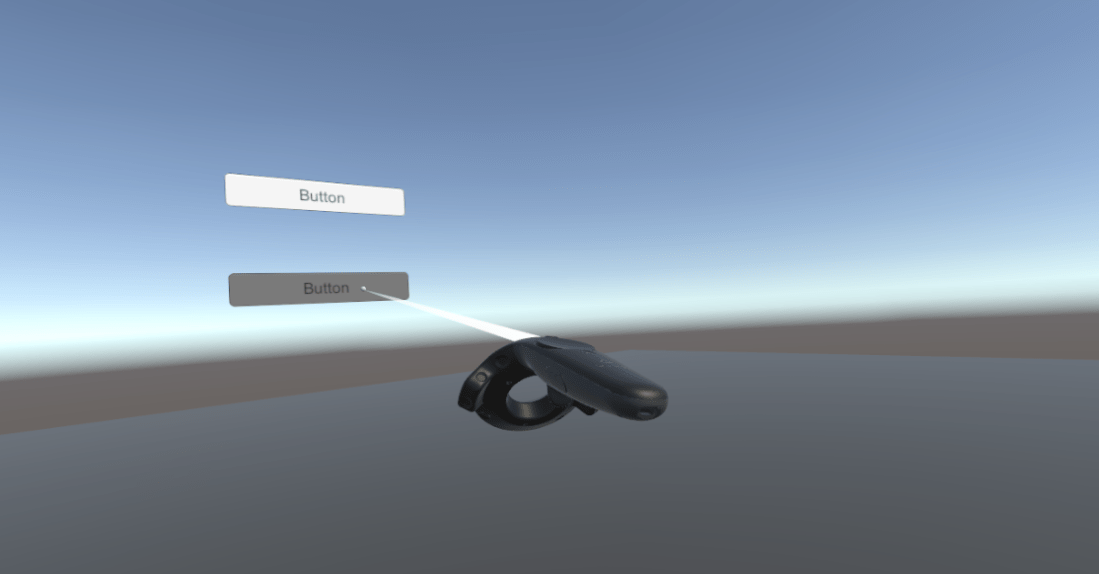
VR menu mechanic
Agisoft Metashape: With Metashape’s documentation, it was very easy to get a basic workflow up and running. I borrowed a DSLR and created two workflows: for capturing the environment and for the render pipeline. I was able to automate the render pipeline, creating 50 million triangle models with a 60-hour render time.
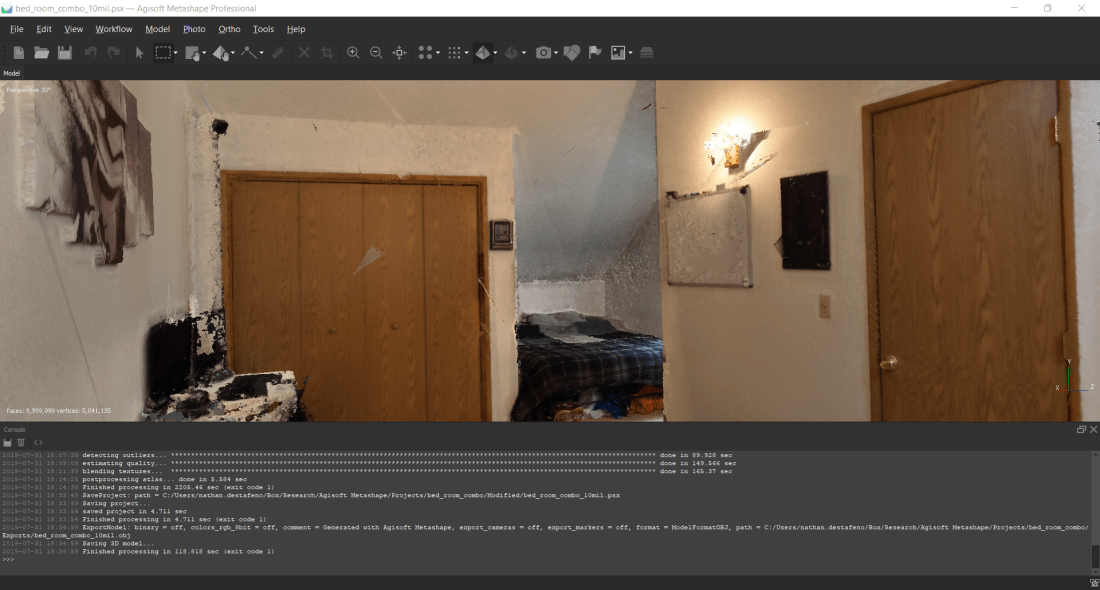
60-hour Metashape render
Blender: Blender was used to clean up my photogrammetry models and create my own assets. Blender is an easy choice as it’s versatile, free, and has thousands of tutorials available. I learned how to model, sculpt, texture, rigging, animation and export to Unity.

Result of the Donut tutorial
Documentation: One of the major tasks for this research was documenting what I learned, the workflows I developed, and tutorials I used. This allows anyone to be able to continue my research in the future. In the end, I wrote over a dozen documents detailing the workflows I developed. I also wrote a ‘getting started’ guide to introduce all the concepts of the research, link to tutorials, and direct to other pieces of documentation.
My position ended before I was able to create a full prototype, but the research and documentation made the groundwork for anyone to pick up right where I left off and continue the project. I’m also still in contact with my old boss, aiding as needed for his future research.
 Nathan De Stafeno